
TekMatix Blog & Help Articles
Use the search bar below to look for help articles you need.
What to Do If Your Free Trial Sign-Ups Stop at the Checkout
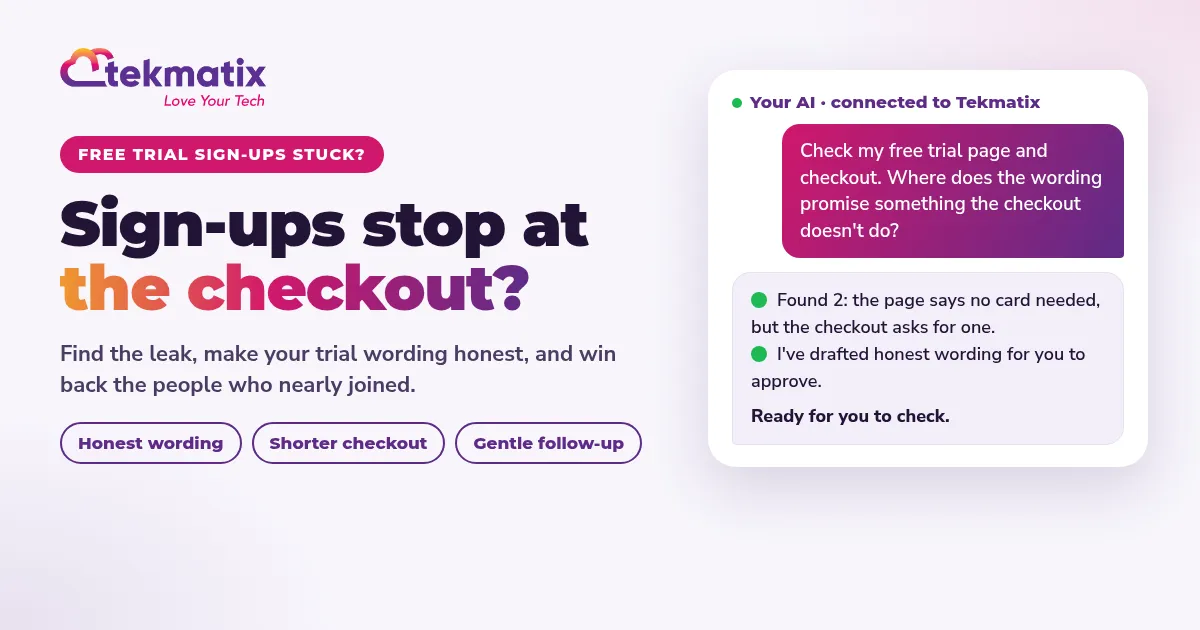
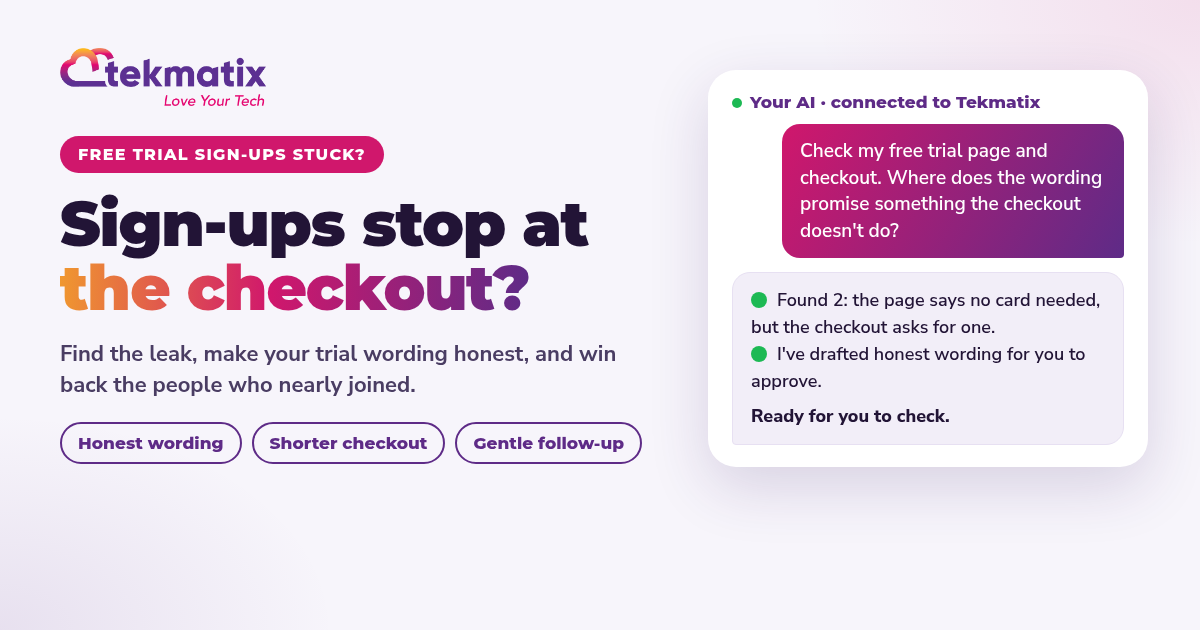
People click your free trial button. They fill in their name. Then they reach the checkout and quietly leave. If that's happening to you, the good news is that it's usually fixable, and often the fix is a few honest words rather than a whole new page.
Quick answer: Find where people stop, then make your trial wording match exactly what your checkout does. If your checkout asks for a card, don't say "no credit card required". Say what happens when the trial ends instead. Then shorten the checkout, add a line of reassurance next to the payment field, and send a kind follow-up to people who started but didn't finish. Or tell your AI to check your page and checkout for mismatches and draft the fixes for you to approve.
Why free trial sign-ups stop at the checkout
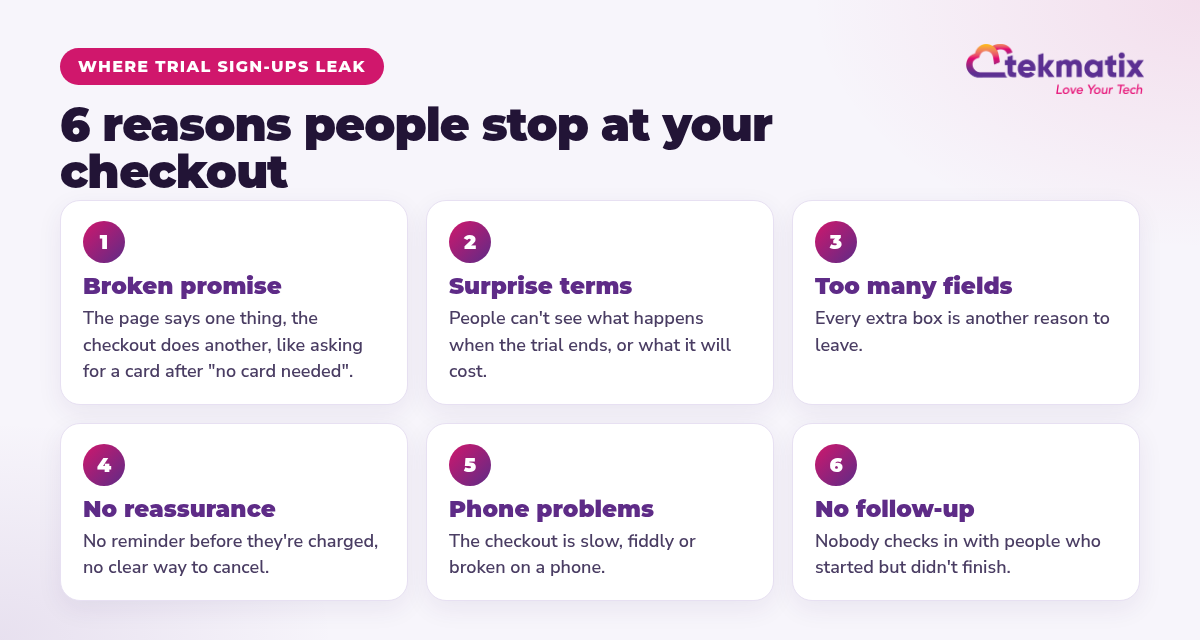
Almost every drop-off comes back to trust. Someone was keen enough to click. Then something at the checkout made them pause, and a pause on a phone is usually a goodbye.
Step 1: Find exactly where people stop
- Count the steps. How many people reached your trial page, how many reached the checkout, and how many finished? The biggest gap is where to start.
- Check your abandoned checkout list. It shows who started and didn't finish. In Tekmatix, here's how to manage, export and recover abandoned checkouts.
- Sign up yourself, on your phone. Use a fresh email address and notice every moment you hesitate, scroll, squint or wonder what happens next.
- Ask a friend to do it while you watch. Don't help. Just note where they slow down.
Step 2: Make your trial wording match your checkout
This is the big one. If your button says one thing and your checkout does another, people feel tricked, even when you didn't mean it. Honest wording almost always beats clever wording.
| If your checkout... | Say this | Don't say this |
|---|---|---|
| Asks for a card | "Free for 14 days. We'll remind you 3 days before your trial ends. Cancel any time before then and you won't be charged." | "No credit card required" or "100% free, no catch" |
| Doesn't ask for a card | "Free for 14 days. No card needed to start." | "Free forever" (unless it is) |
| Charges a small set-up fee | "Try it for 14 days for $1." | "Free trial" in big letters with the fee in small print |
| Rolls into a paid plan | "After your trial, it's $X a month unless you cancel." | Nothing at all about what happens next |
Check every place the promise appears: your ads, your home page, your pricing page, your buttons, your emails and the checkout itself. One leftover "no card needed" on an old page is enough to lose people.
- Read your trial page out loud, then go through the checkout.
- Is there anything the checkout asks for that the page didn't mention?
- Is it clear what happens on the day the trial ends?
- Would you feel surprised if you were the customer?
Step 3: Cut the checkout down to what you really need
- Ask only for what you need to start the trial. Business size, how they found you and phone number can wait until onboarding.
- Consider a two-step checkout, so people give their name and email first and their payment details second. That also means you can follow up kindly if they stop. Here's how to set up a two-step checkout in Tekmatix.
- Turn on address auto-complete and the payment options people expect, so there's less typing on a phone.
- Remove links that lead away from the checkout, such as your main menu.
Step 4: Add reassurance right next to the payment field
The moment someone is about to type their card number is the moment they need reassurance most. Put a short line right there:
- What happens when the trial ends, and when they'll be reminded
- How to cancel, in plain words
- That their payment details are secure
- A real way to ask a question, such as live chat
Step 5: Follow up kindly with people who didn't finish
Some people simply got interrupted. A short, helpful email can bring them back. Keep it friendly: remind them what they were signing up for, answer the most common worry (usually the card question), and give them one clear link back to the checkout. Make sure your privacy policy covers it, and always include an easy way to unsubscribe.
Step 6: Test, then check again in two weeks
Change one thing at a time where you can, so you know what worked. Write down your starting numbers, make the change, and compare after two weeks. Then go through your checkout on your phone again, because pages drift over time.
Tell your AI, and it's done
You don't have to do all of that by hand. In Tekmatix you can use Ask AI, built into every account, or connect your own Claude, ChatGPT or GrokBot. Tell it what you want, make a cuppa, and review what it's done.
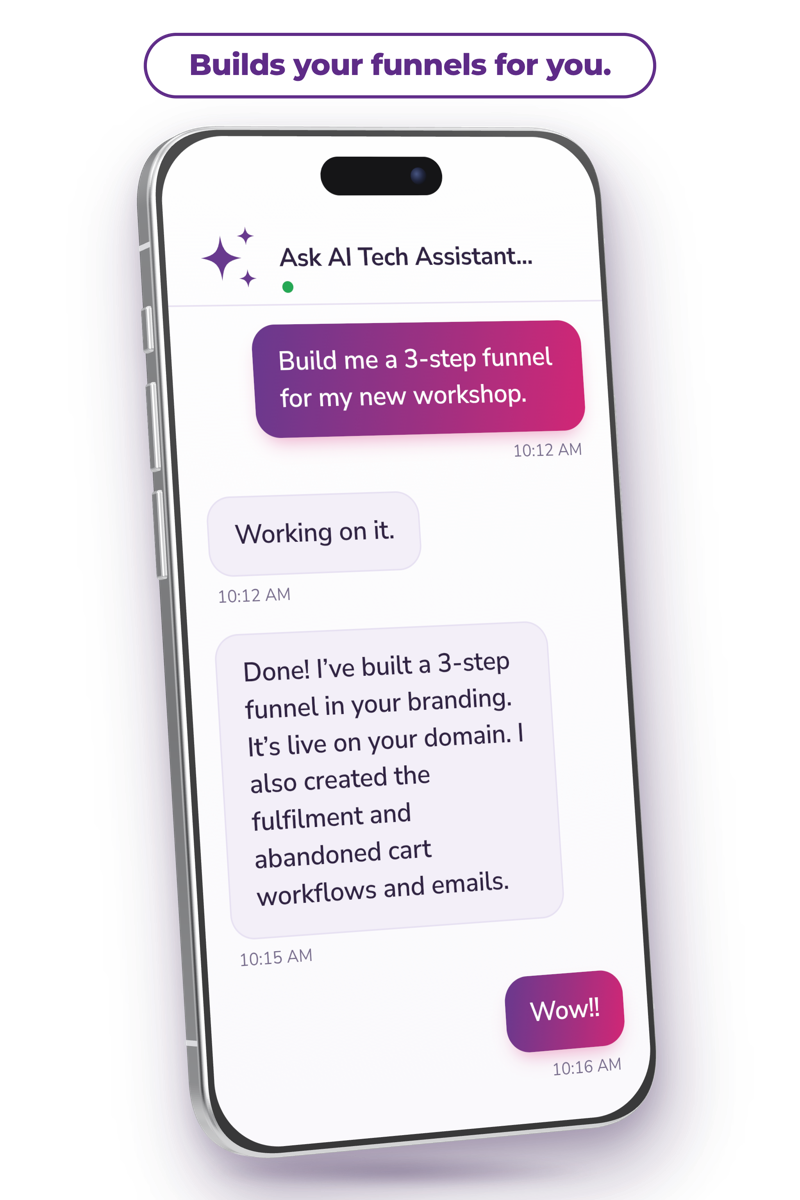
- Ask AI can read your pages and draft wording, but it can't build workflows on its own yet. To set up automated follow-up, use your own AI (Claude, ChatGPT or GrokBot) with browser control, or a Tekspert, and review it before it goes live.
- AI usage, emails and texts are pay as you go.
- AI can't promise results. It does the work faster, and how well it works depends on your offer and your instructions.
- This article is general guidance, not legal advice. Check your consumer and spam law obligations for your country.
You stay in control. Your AI shows you what it will do and asks before it creates, changes, deletes or sends anything.
Frequently asked questions
Why do people start a free trial sign-up and then stop at the checkout?
Usually because something surprises them. The most common one is a page that says no credit card is needed, followed by a checkout that asks for a card. Unclear terms, too many fields and a fiddly mobile checkout are the next biggest reasons.
Should I say "no credit card required" on my free trial?
Only if it's true. If your checkout asks for a card, say so up front and explain what happens when the trial ends, for example: "Free for 14 days. We'll remind you before your trial ends, and you can cancel any time before then."
Is asking for a card at the start of a trial a bad idea?
Not necessarily. Asking for a card usually means fewer sign-ups but more of them become paying customers. Not asking usually means more sign-ups and fewer paying customers. Either can work. What doesn't work is promising one and doing the other.
How do I know where people are dropping off?
Compare how many people reach your checkout with how many finish it. Your abandoned checkout list shows who started and didn't finish. Then go through the checkout yourself on your phone and note every moment you hesitate.
Is it OK to email people who didn't finish signing up?
A short, helpful follow-up to people who started your checkout is common practice, as long as they gave you their email address in a way that allows it under your privacy policy and local spam laws, and every email has an easy unsubscribe.
Can my AI fix my trial wording for me?
Your AI can read your sales page and checkout, list every mismatch and draft honest replacement wording. You review it and approve it before anything changes.
Run your trials, checkouts and follow-up in one place
Tekmatix is the all-in-one business platform you run by talking to AI. Sales pages, checkouts, abandoned checkout recovery and email follow-up in one subscription, with real human Teksperts 24/7.
See how Tekmatix worksSarah x
Warning: you may get addicted to your productivity.

Copyright © 2026 TekMatix. All rights reserved | [email protected]